I have begun fabricating the revised engine mounting for the new Honda engine. Since the GS190 is known for being a smooth runner (opposed to the diesel engine’s notorious vibration), I can dispense with the heavy and complicated rubber mounting arrangement I created previously.
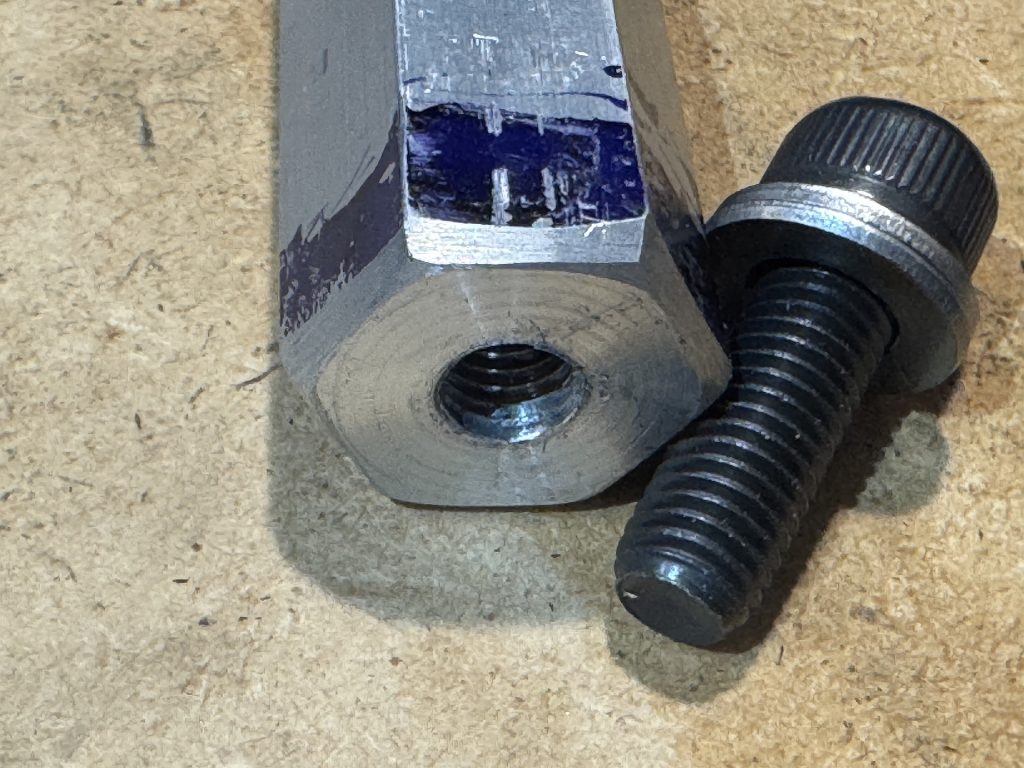
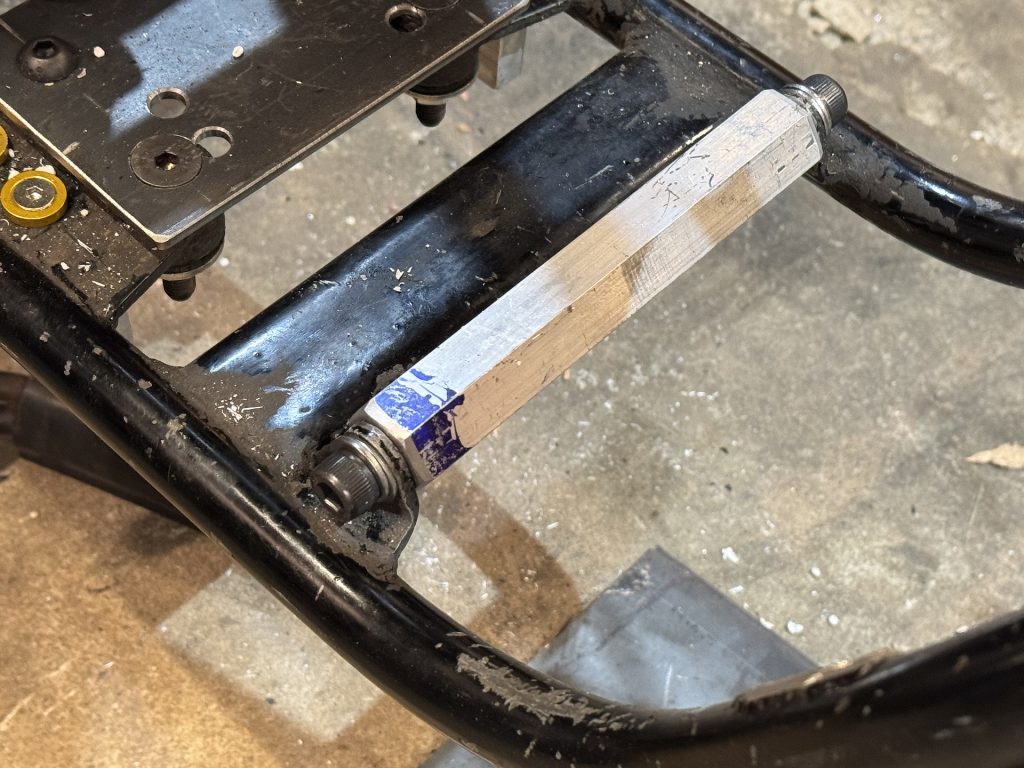
I needed something I could center-bore in the lathe with my three-jaw chuck, but still have a flat surface to bolt the engine plate to. The obvious solution was hex bar. I bought a length of 6061 alloy that’s 1″ across flats. I cut it to fit the Benelli’s frame tabs, then faced it, drilled the ends, then tapped the holes for M10 bolts.
The next step was fabricating an engine plate. I had already developed a mounting configuration I was happy with, but frankly, the prospect of spending a whole afternoon torturing a steel plate with a cutoff tool and angle grinder was wholly de-motivating. Whenever I had free time, all I could think of was that awful screaming noise a cutting wheel makes, and the dirty mess I’d have to deal with afterwards. I kept finding excuses to stay out of the basement.
When you can’t get through something, you should figure out how to go around it. In my case, going around it involves paying SendCutSend to make an engine plate for me. I did some careful measuring and drew up a design in Adobe Illustrator. I then printed it out on paper, cut it out, and verified what worked and what didn’t.
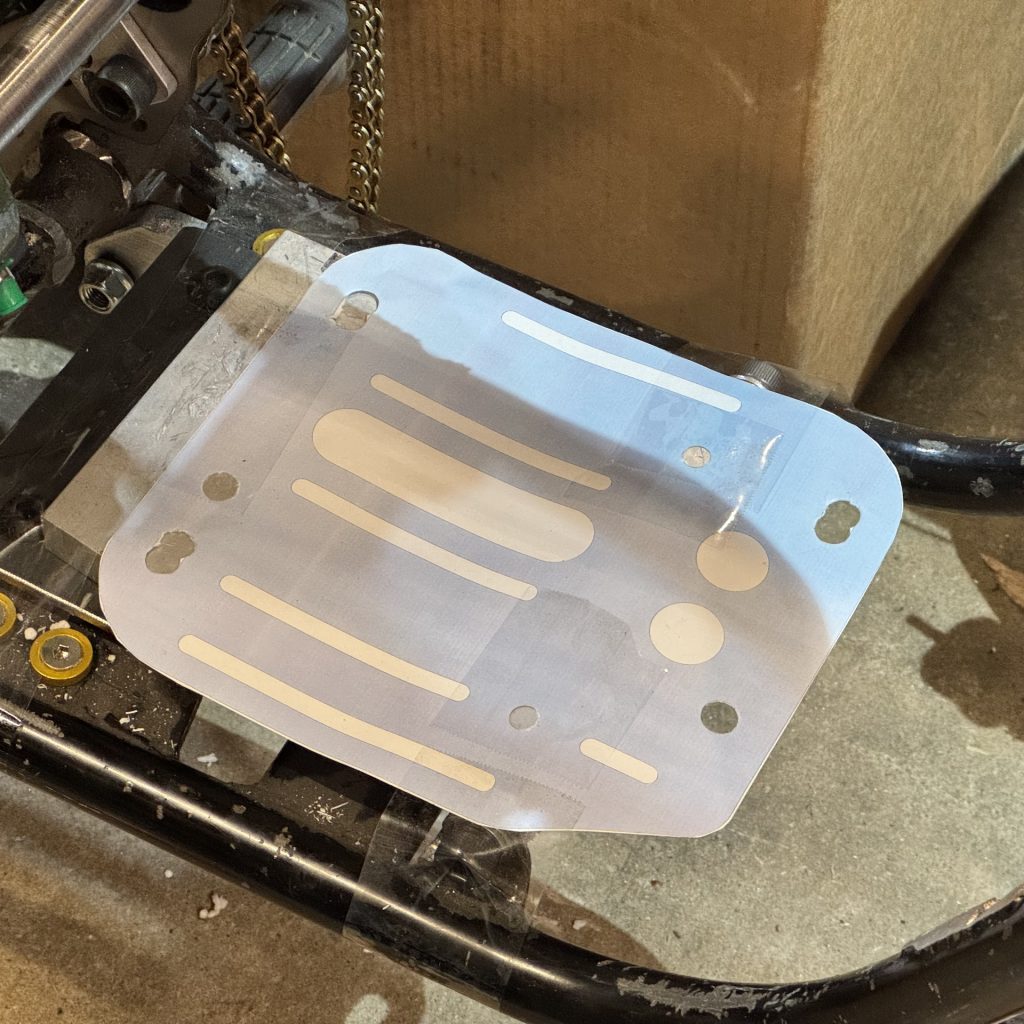
I took my time at this stage and went through close to a dozen iterations, tweaking and re-measuring. “Measure twice, cut once” is smart, but “Measure a whole bunch of times before you spend $50 and wait a week” is even better advice.
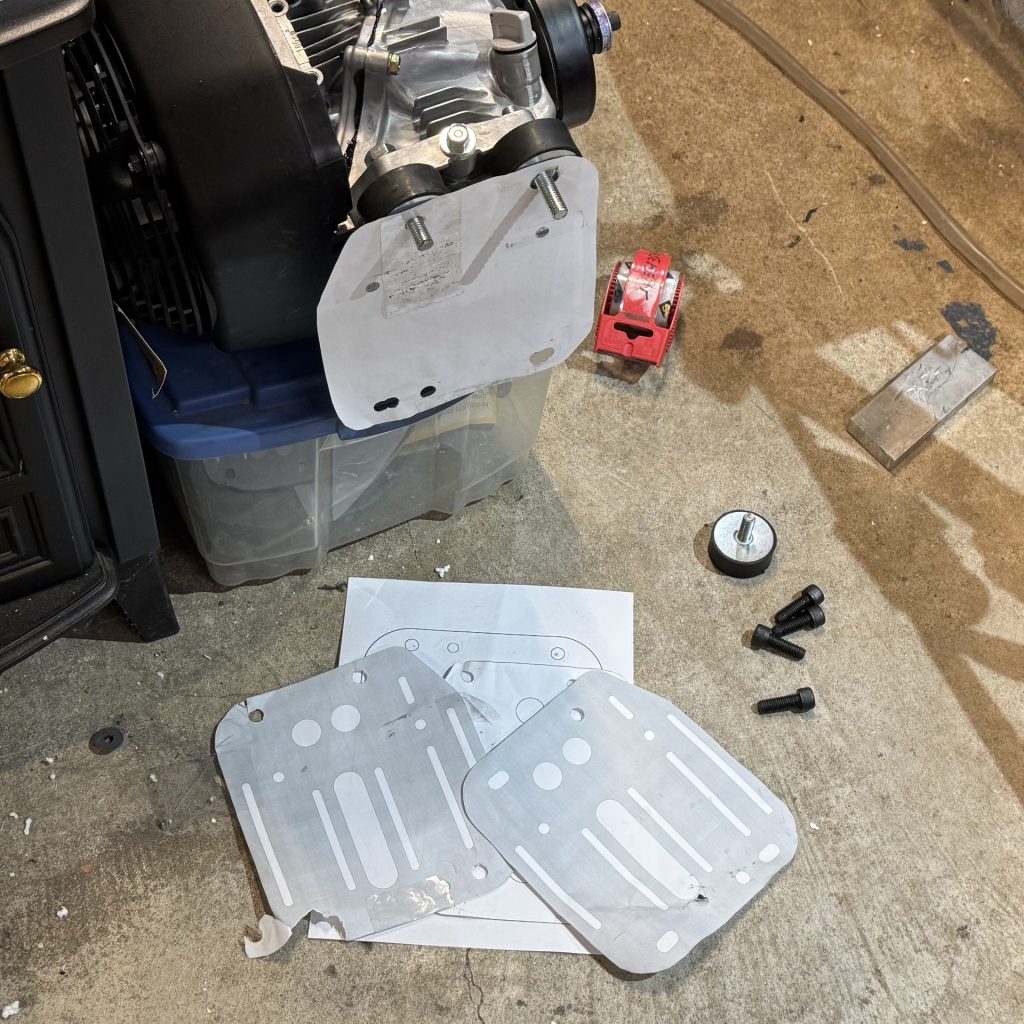
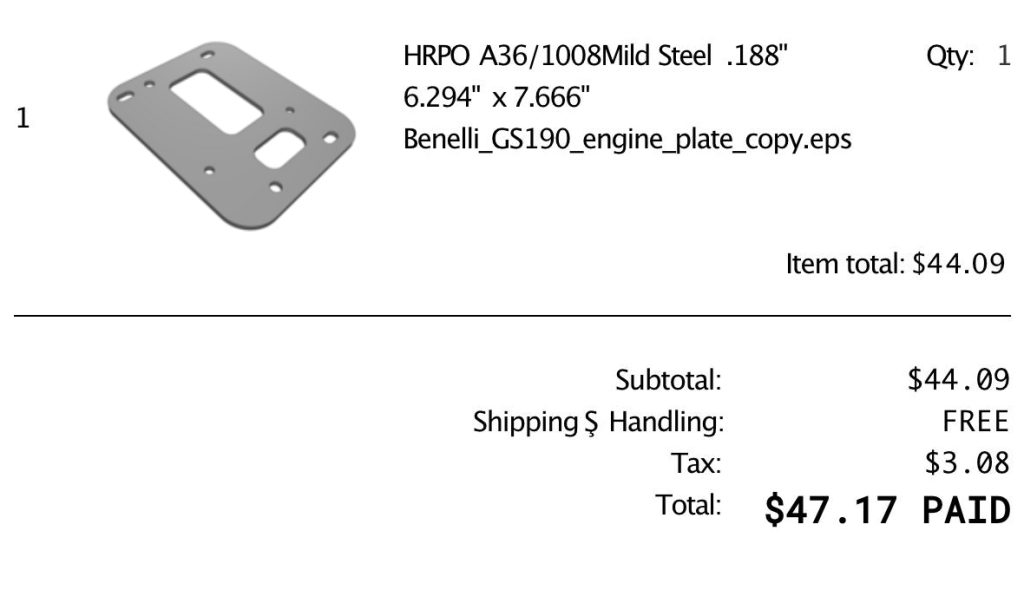
Once I was confident that I had the design I wanted, I could upload the file. SendCutSend accepts the 2D EPS file directly and allows me to choose a material and thickness. It should be here in about a week.