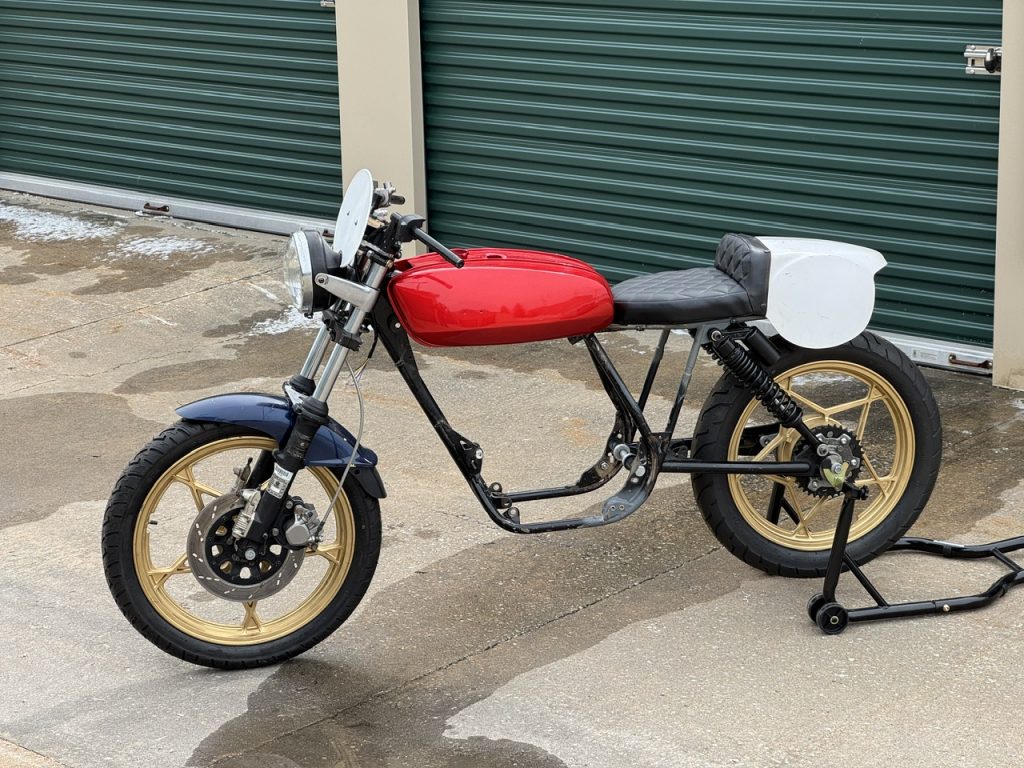
Even though I sold the engine from my Bultakenstein project and abandoned my prior plans for it, I am not quite ready to just walk away from the chassis I created. I invested a lot of thought and energy into it, and I still think it has value and a fair bit of promise.
With my debilitated right wrist, a left-hand throttle has become practically a requirement for me, so clutchless bikes are the only practical option if I want to actually ride the finished product myself. Also, it has become clear to me that as far as project bikes go, industrial engine swaps have sort of become my niche.
After experiencing The Bride’s performance with 6.5 horsepower on tap, I loved the ease and smoothness of the CVT torque converter, but I had to admit that the performance envelope was pretty limited at the top end. Looking at my other current projects’ meager 5–6 horsepower engines, they too will end up as more toys and novelties than true, usable transport. I realized that I might eventually want a CVT bike with a bit more oomph in the engine bay for meaningful use in the long term.
I took a long look at the engine options available, and I chose an 11 HP LCT Stormforce 369 engine I found on Ebay. I was impressed with the quality of the smaller LCT engine I used for The Bride; it’s a higher-end brand. Compared to a Predator 212-based engine, even a Stage 2 build, this mill’s 17.2 lbs-ft @ 3030 rpm is in a whole ’nuther league. Compared to a full-fat 420 or 440 cc big block GX clone, this 369cc engine is more along the lines of what a 30 Series torque converter can cope with, should I decide to go that route. Plus, one silly detail I like is that the displacement is a poetic match for the Bultaco 370 frame.
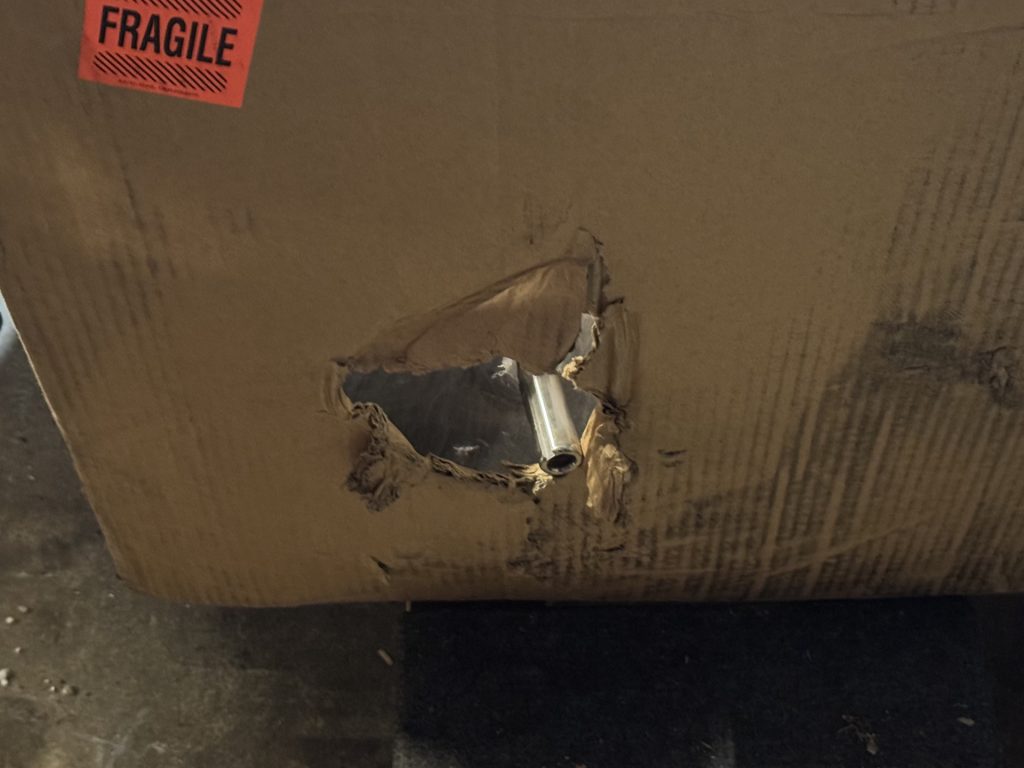
I was excited to get the engine for $349, including tax and shipping. My excitement diminished greatly when I saw the box sitting upside-down in my driveway, its “Fragile – This end up” arrow clearly pointing down at the concrete. As I feared, the engine had been poorly packed and FedEx had meted out the sort of abuse shippers are notorious for. The output shaft was sticking out through the side of the box, no padding or guard on it at all.
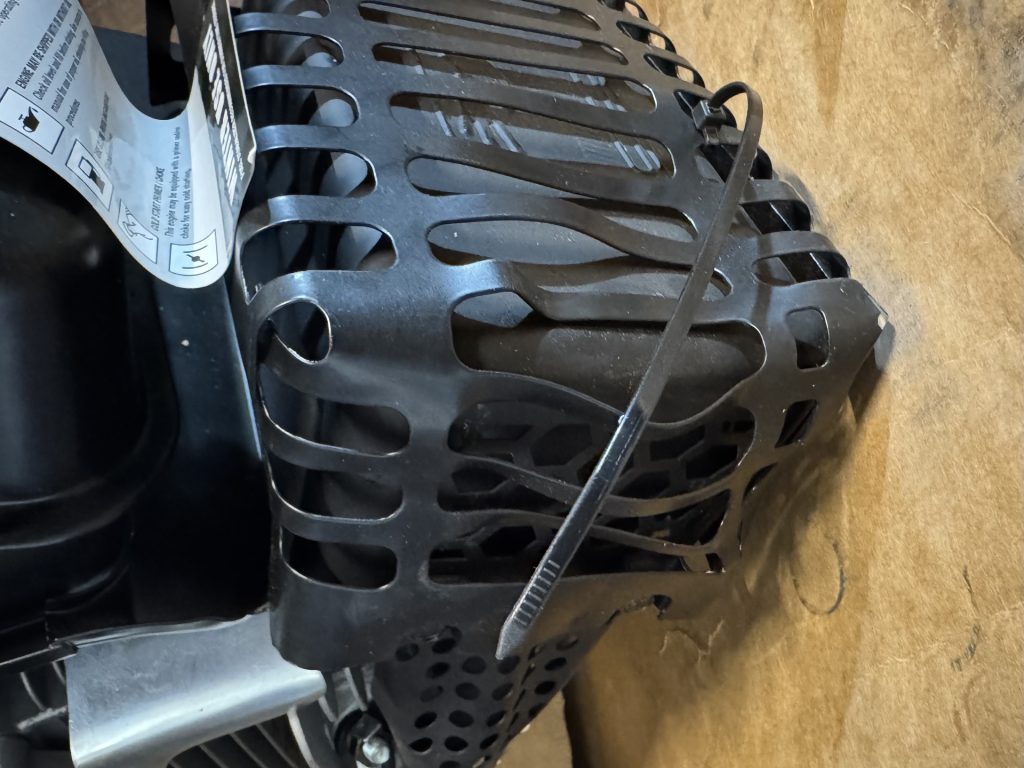
Once I flipped it over and opened the box, more damage was apparent. The heat shield on the muffler was smashed.
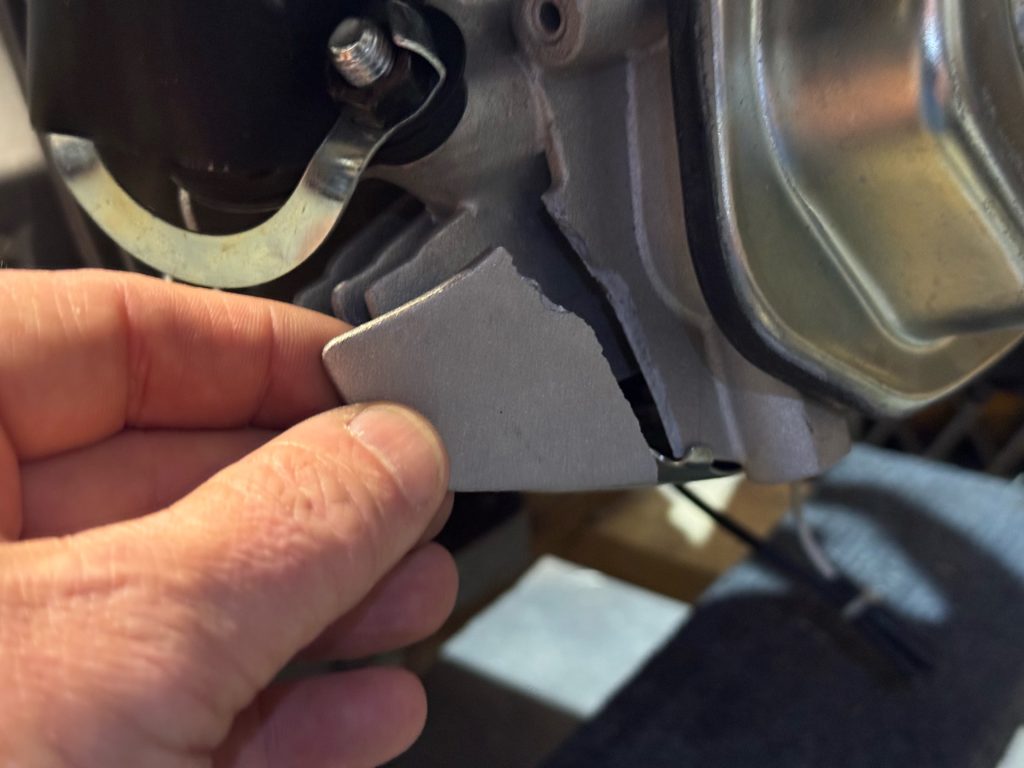
And lastly, the uppermost cooling fin on the cylinder was broken off.
My biggest worry was the state of the crankshaft. I put a dial indicator on end of the output shaft and even though the setup was not machine-shop-accurate, I was relieved to detect no measurable runout.
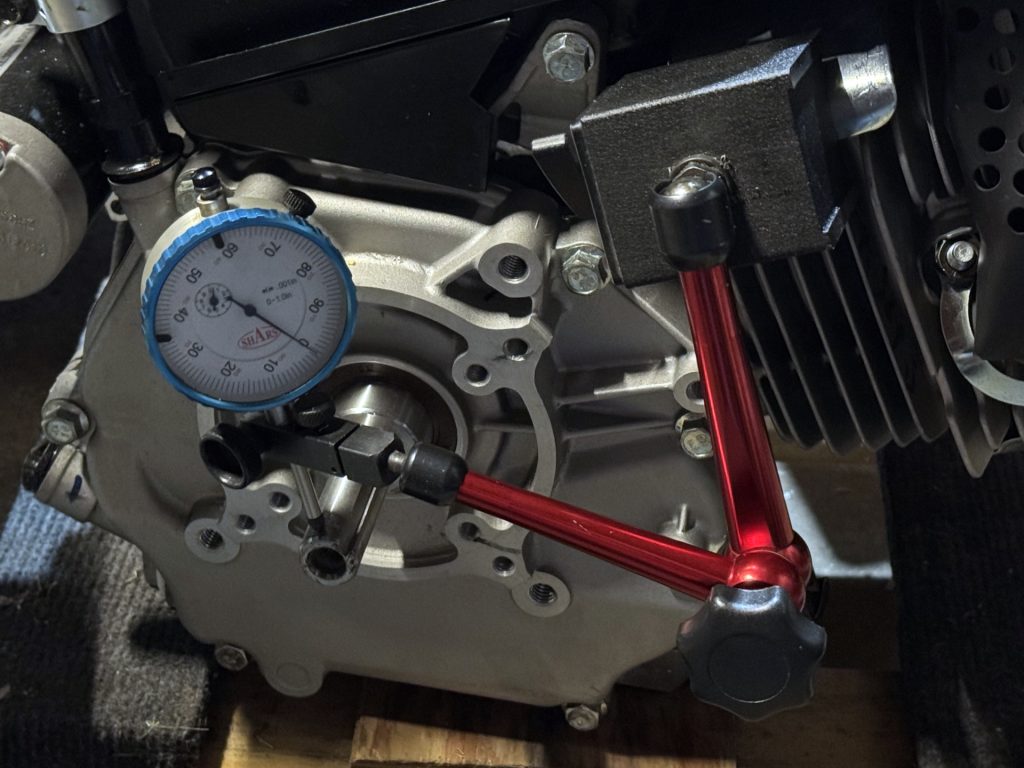
I contacted the vendor who threw a $50 refund at me to shut me up, which was probably equitable. As long as the crank is true, none of the other damage will have a meaningful impact on my project, and $300 for what I ended up with is a decent deal.
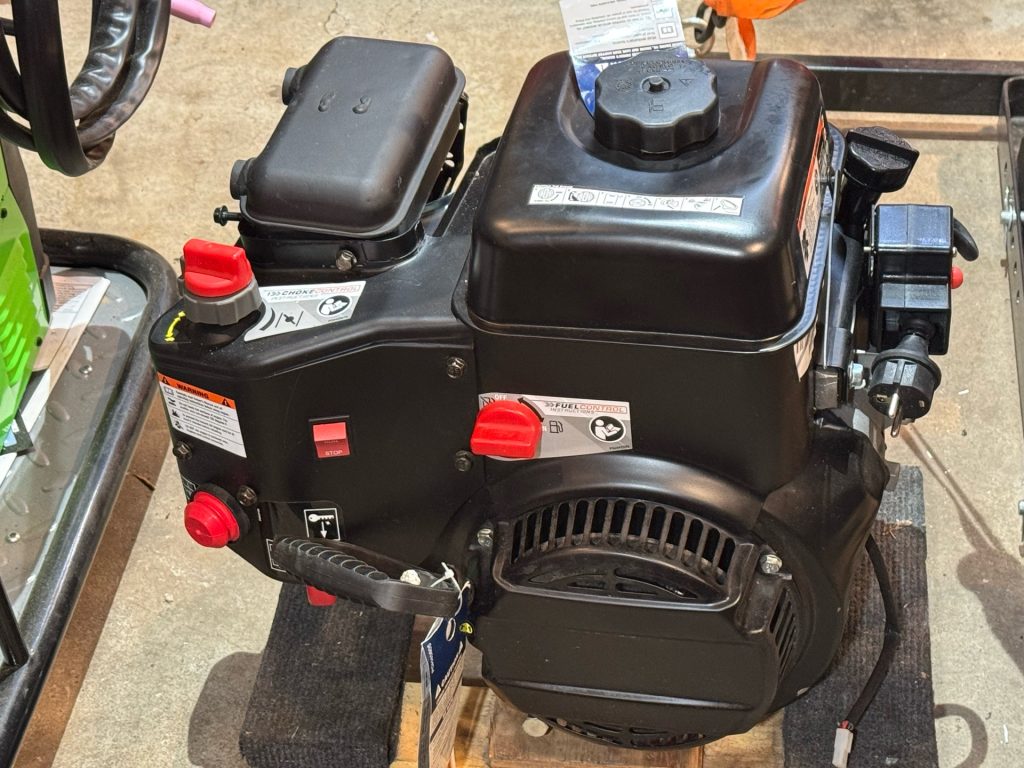
She’s a big ol’ gal, to be sure—much larger than a GX200 clone. Installing this, along with a torque converter, will definitely require cutting up the engine cradle on the Bultaco frame. I knew that going in. The choice between a borderline-adequate 30 Series torque converter or the significantly larger 40 Series will also need to be made eventually.
But all that is a ways down the line. The Benelli-Honda GS190 remains on the front burner (whenever I can get homeowner tasks out of the way and actually spend time in the garage). This project will have to wait its turn, but it’s nice to know I have a plan in place to make use of the Bultaco chassis.
As for a name, I’m riffing off the old name, Bultakenstein, to come up with “Bultorquenstein” (Bultaco + Frankenstein + torque converter).